How Many Trading Days in a Year? The Real Number Every U.S. Investor Should Know
If you’ve ever looked at a yearly return on a stock, mutual fund, or ETF and wondered how analysts turn daily moves into annual numbers, you’ve already brushed up against one of the most important figures in finance: the number of trading days in a year.
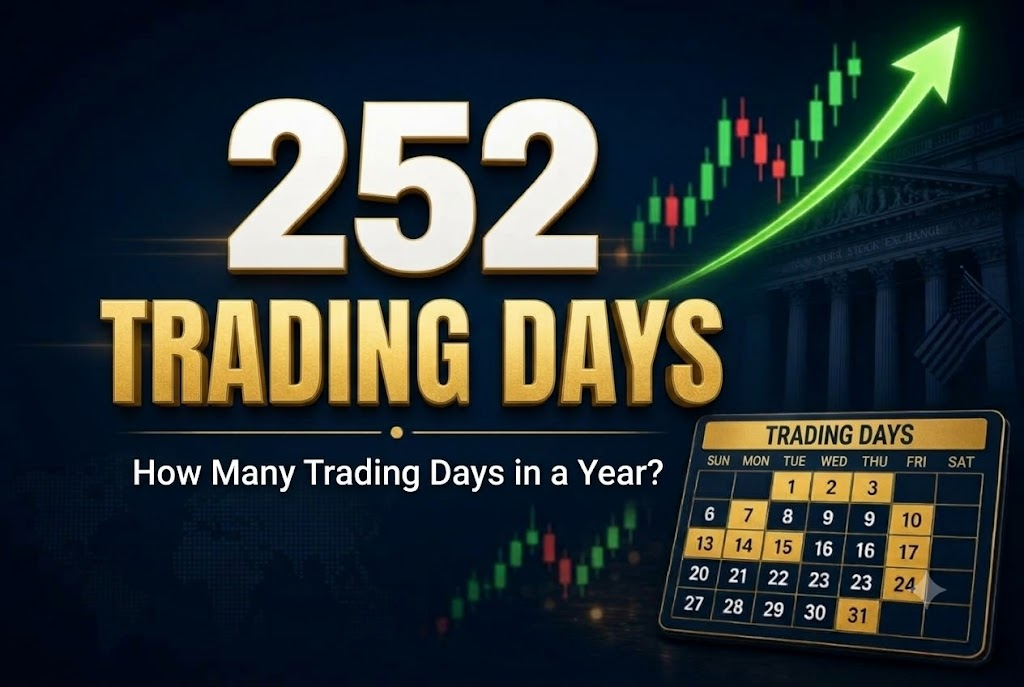
The short, practical answer is this: the U.S. stock market (NYSE and Nasdaq) is open for roughly 252 trading days in a typical year. That number is not carved in stone — it usually lands between 250 and 253 depending on how weekends and holidays fall — but 252 is the industry standard used for annualizing returns, calculating volatility, and running risk models.
Here’s everything you need to know about that number, why it matters, and how it shapes the way Americans invest and trade.
Why the Market Isn’t Open 365 Days a Year
A calendar year has 365 days (366 in a leap year). Subtract the 104 weekend days (52 Saturdays + 52 Sundays) and you’re left with about 261 weekdays. From those weekdays, the major U.S. exchanges remove a set of observed holidays — typically nine or ten full closures.
The core holidays the New York Stock Exchange and Nasdaq close for every year are:
- New Year’s Day
- Martin Luther King Jr. Day
- Presidents’ Day (Washington’s Birthday)
- Good Friday
- Memorial Day
- Juneteenth National Independence Day
- Independence Day
- Labor Day
- Thanksgiving Day
- Christmas Day
When a fixed-date holiday lands on a weekend, the exchanges usually observe it on the adjacent Friday or Monday. That shift is the main reason the final count moves by a day or two from year to year. In addition, markets often close early (at 1:00 p.m. ET) on the day before Independence Day, the day after Thanksgiving, and Christmas Eve. Those early-close sessions still count as trading days because the market opens.
The simple math looks like this:
365 calendar days
– 104 weekend days
– ~9–10 market holidays
= approximately 252 trading days
Why 252 Is the Magic Number in Finance
Professionals don’t just use 252 because it’s convenient — they use it because it produces consistent, apples-to-apples comparisons.
- Annualizing daily returns: Multiply the average daily return by 252 to estimate a yearly figure.
- Volatility (standard deviation): Annualized volatility is daily standard deviation × √252. This is the formula behind the VIX and nearly every risk model.
- Sharpe ratio and other performance metrics: Almost every risk-adjusted return calculation assumes 252 trading days.
- Options pricing and trading strategies: Models that price options or size positions often rely on the same 252-day year.
Using 365 instead would overstate both returns and risk because the market is closed on weekends and holidays. Using 250 or 253 for a specific year is more precise for back-testing that exact calendar, but for everyday analysis and comparison, 252 remains the accepted standard.
How the Number Changes From Year to Year
Looking at recent history shows the variation is small but real:
- Many non-leap years land right around 251–252.
- Leap years sometimes push the total to 253 when extra weekdays appear and holidays fall favorably.
- Occasional one-off closures (national days of mourning, extreme weather, or other events) can shave a day or two off the schedule.
For most individual investors, the difference between 250 and 253 is minor. What matters more is knowing that the market is open roughly five days a week, minus holidays, and planning around that rhythm.
Practical Tips for Everyday Investors and Traders
Knowing there are about 252 trading days helps in several practical ways:
- Set realistic expectations – A strategy that aims for a certain percentage return per day has to be evaluated against 252 opportunities, not 365.
- Plan cash needs – Dividends, interest, and distributions often arrive on schedules tied to trading days, not calendar days.
- Avoid holiday surprises – Checking the official NYSE or Nasdaq holiday calendar once a year prevents the frustration of discovering the market is closed when you expected it to be open.
- Think in trading months – Most months have 20–22 trading days. February is usually the shortest; months with few holidays feel longer.
- Extended hours still exist – Pre-market and after-hours sessions let you react to news outside the regular 9:30 a.m.–4:00 p.m. ET window, but those periods are not counted in the official 252-day total and usually have thinner liquidity.
The Bottom Line
So, how many trading days are in a year? For the U.S. stock market the reliable working answer is approximately 252. That single number sits at the center of how returns are measured, how risk is calculated, and how professional and retail investors alike translate daily market moves into meaningful yearly results.
Next time you see an annualized performance number or a volatility figure, you’ll know exactly where the 252 comes from — and why it remains one of the quiet constants of American investing